There is a sentence I have heard more times than I can count in regulated environments:
“We need to validate this before we can move forward."
In regulated industries, validation is not optional. Healthcare, pharmaceuticals, finance, aviation, and critical infrastructure all rely on rigorous processes designed to ensure that systems are safe, reliable, and fit for purpose. Those safeguards exist for good reasons and they can be the only thing standing between a useful innovation and a very expensive mistake.
Yet somewhere along the way, many organizations developed a curious habit of using validation to avoid responsibility.
The organizations that speak most passionately about rigor are not always the ones managing risk most effectively. Sometimes they are simply very good at delaying decisions, reaching a state where validation stops being a mechanism for learning and becomes a mechanism for preventing action.
What Validation Is Supposed To Do
Validation exists for good reasons. Before a system influences a consequential decision, you need evidence that it behaves reliably under the conditions where it will be used. Healthcare decisions carry asymmetric consequences. A single failure can cause irreversible harm. The argument for caution before deployment is not bureaucratic timidity. It is a rational response to a real asymmetry.
The history of modern quality management is, in many ways, a history of learning that assumptions are not enough. Validation is one of the reasons complex systems work as reliably as they do.
But the goal of validation has never been certainty. It has always been sufficient confidence. No clinical trial proves a drug will work for every patient. No software test guarantees the absence of bugs. Validation manages uncertainty. It does not eliminate it.
The problem begins when that distinction is lost. When the question shifts from do we have sufficient confidence to act to can we rule out every remaining risk. Those are not the same question. The second one has no answer. And an organization that keeps asking it has not raised its standards. It has quietly abandoned the responsibility to decide.
When Validation Becomes a Waiting Room
In practice, validation processes rarely remain neutral mechanisms. They accumulate institutional mass. They acquire stakeholders. They develop a lifecycle that is increasingly disconnected from the original engineering or scientific question they were created to answer.
I have seen this repeatedly. In one case, a system had already passed every benchmark originally requested. Internal validation was complete. External validation was complete. Months later, additional datasets were requested. Then additional edge cases. Then another review cycle. Nobody involved believed the system was unsafe. Nobody was willing to be the person who declared the process finished.
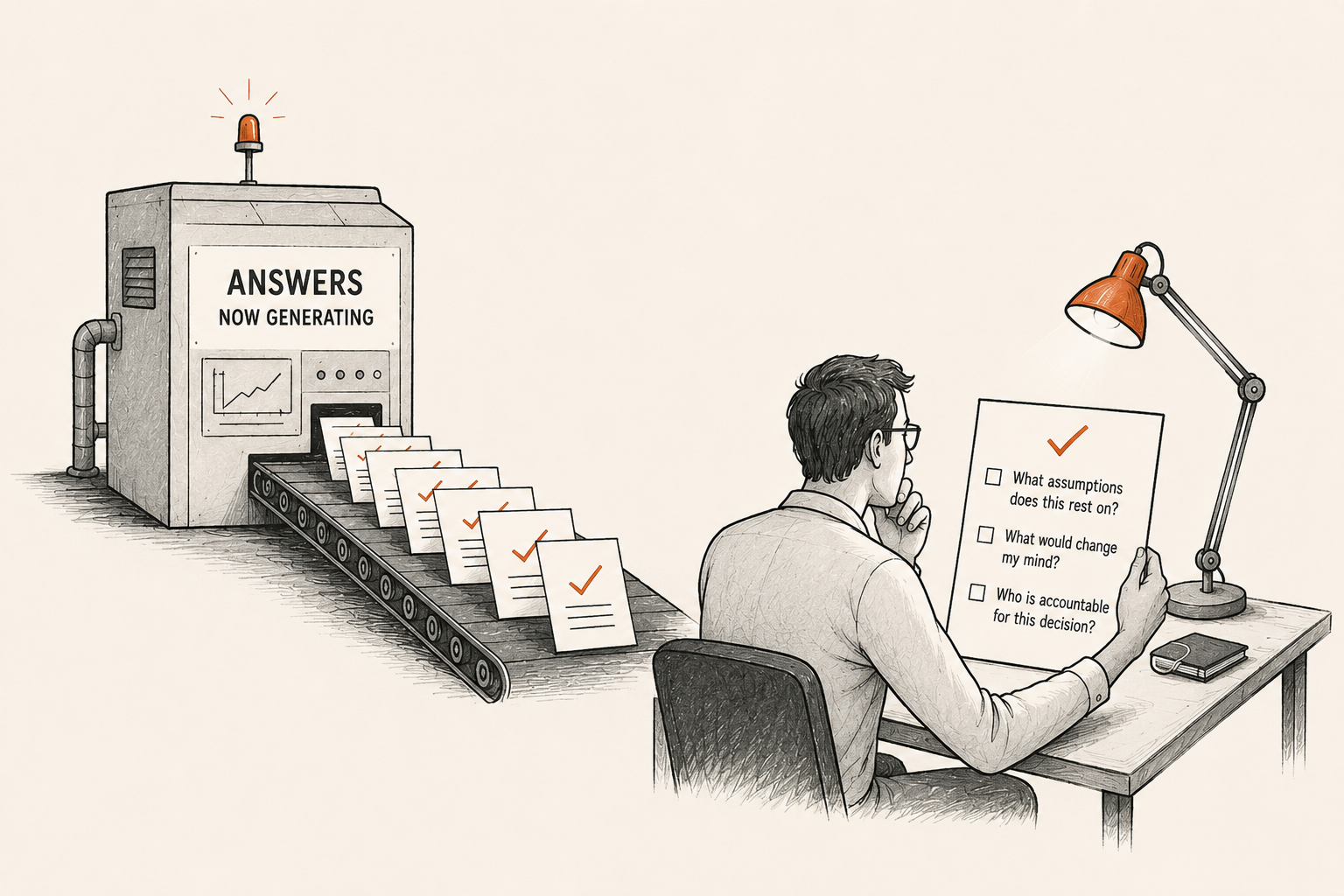
This is the validation trap. It does not announce itself. It rarely involves explicit obstruction. It operates through the entirely legitimate mechanism of asking for more evidence, indefinitely.
Every real-world decision is made under incomplete information. A hospital adopting a new workflow does not know exactly how clinicians will use it. A pharmaceutical company implementing a new analytics platform does not know every future use case. An organization deploying an AI assistant does not know every edge case that will emerge.
No amount of pre-deployment testing can fully answer questions that only arise after deployment. At some point, the organization must decide.
Medicine Never Waited For Perfect Knowledge
One of the most interesting aspects of this discussion is that medicine itself has never operated on the assumption that uncertainty must disappear before action is taken.
Take paracetamol. It is one of the most widely used medications in the world, administered billions of times and still a cornerstone of everyday clinical practice. Yet despite decades of use, the precise mechanisms underlying its therapeutic effects remain incompletely understood.
What we do understand, with considerable precision, are its risks. Overdoses cause severe liver toxicity. We know how to identify vulnerable patients, how to monitor for complications, how to intervene when required.
Medicine did not wait for mechanistic certainty before making paracetamol available. It built governance around uncertainty instead.
The critical question was never whether uncertainty existed. It was whether benefits outweighed risks under defined conditions, and whether appropriate safeguards could manage what remained unknown.
That distinction points toward something more productive than demanding that AI systems prove they cannot fail. No complex system can satisfy that standard. The goal instead is to establish guardrails, monitoring mechanisms, and escalation pathways that allow failures to be detected and managed when they occur.
In pharmaceuticals, we call this pharmacovigilance. The equivalent for AI is still taking shape, but the underlying principle is the same. Mature systems are not defined by the absence of uncertainty. They are defined by how they behave when uncertainty remains.
The Trap Has Two Faces
The first face is institutional
Organizations that have historically been exposed to risk from premature adoption develop cultures where caution is rewarded and speed is penalized. This is an understandable adaptation. It is also one that generalizes badly.
A culture calibrated for managing pharmaceutical approvals does not transfer cleanly to managing software deployment timelines. The consequence asymmetries are different. The reversibility of failure is different. Yet the cultural response is often identical because institutions do not easily distinguish between categories of risk.
The second face is individual
Institutions reward the avoidance of visible failures far more consistently than they reward the creation of invisible benefits. No committee member is criticized for requesting additional evidence. Many have been criticized for approving something that later failed.
The incentive structure is therefore predictable. More validation is always defensible. Approval always carries personal exposure.
The result is perpetual validation
This is where validation can become something else entirely. Not a governance mechanism. Not a quality process. A performance.
Validation theater occurs when the primary function of validation is no longer to generate information but to demonstrate caution. In the worst cases, the objective is no longer to determine whether a system should be deployed. The objective becomes ensuring that nobody can later be blamed for deploying it.
The Last Mile Is Not A Technical Problem
I have watched technically sound systems spend years in validation processes that were, in practice, indeterminate. The teams involved were not incompetent. The organizations were not malicious. The systems themselves were genuinely useful.
But there was no defined condition under which validation would conclude. No clear owner of the decision. No explicit threshold that, once crossed, would result in deployment. There was only the ongoing possibility of asking for more.
The irony is that healthcare professionals make difficult decisions under uncertainty every day. Physicians routinely balance incomplete information, competing risks, and imperfect evidence. A surgeon does not wait until all uncertainty disappears before entering the operating room. At some point, sufficient evidence has been gathered and a decision must be made because the risks of inaction have become greater than the risks of action.
Organizations often struggle with precisely this step
They become exceptionally good at evaluating the risks of change while becoming remarkably poor at evaluating the risks of delay.
The underlying mistake is subtle. Organizations often compare the risks of a proposed system against an idealized future state rather than against the imperfect system that exists today. The relevant comparison is not between a new system and perfection. It is between a new system and the current alternative.
The status quo receives an implicit exemption from scrutiny simply because it already exists.
The Real Cost Of The Trap
The validation trap is rarely perceived as a failure mode from inside the institution. From inside, it looks like rigor. That is what makes it durable.
The cost is largely invisible because it is denominated in things that never happened: systems never deployed, workflows never improved, decisions never better supported, opportunities never realized.
Unlike a failed deployment, a perpetually deferred one produces no incident report. It triggers no retrospective. It simply persists.
There is also a second-order cost that compounds over time. Teams that spend years navigating indefinite evaluation processes learn to optimize for evaluation rather than for use. The incentive drifts toward producing evidence that satisfies validation criteria rather than building systems that function effectively in practice.
Clinical environments eventually end up with systems that are exceptionally well documented and operationally inert.
The greatest danger is not that validation exists. It is that validation becomes detached from decision-making. Once that happens, evidence is no longer being collected to inform a choice. It is being collected to postpone one.
The question is not whether uncertainty remains. The question is whether enough has been learned to justify a decision.
Expertise And The Responsibility To Decide
Experienced clinicians do not wait until uncertainty disappears before acting. They build internal models of reality that allow them to act despite it. They learn which unknowns matter, which do not, and when additional information is likely to change a decision.
That capacity is one of the defining characteristics of expertise.
The same principle applies to organizations. Mature institutions do not eliminate uncertainty before deploying systems. They develop sufficient understanding of the risks, the benefits, and the safeguards to make an informed decision, and then accept responsibility for it.
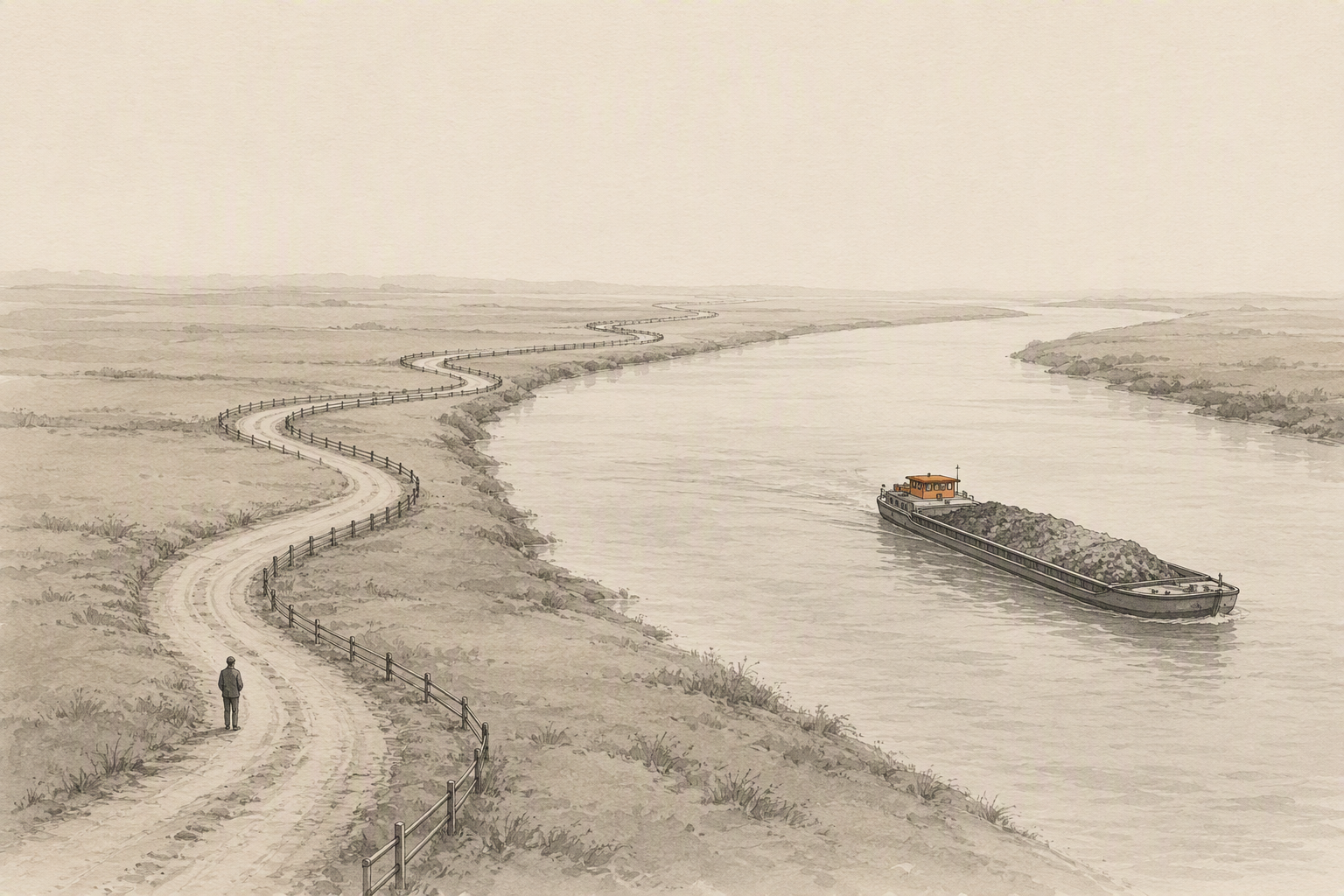
The validation trap begins when validation becomes a substitute for judgment. At that point, evidence is no longer being gathered to support a decision. It is being gathered to avoid making one. The institution stays in motion while remaining perfectly still.
And the paradox tightens from there. Organizations so focused on avoiding the visible risks of deployment can become blind to the risks accumulating from delay: the patients who waited longer, the errors that persisted, the decisions that kept falling to people with less support than they needed.
The safest decision is not always the one that waits longest. Institutions that optimize for avoiding visible mistakes eventually lose the capacity to recognize invisible ones. By the time the cost of inaction becomes legible, it has usually been paid many times over.